


Sciatica Can Involve the Pelvic Floor
What is sciatica with pelvic involvement? Sciatica with pelvic involvement is sciatic nerve pain that occurs alongside pelvic floor muscle dysfunction, where the two problems feed each other. The familiar shooting pain down the leg becomes tangled up with tension, guarding, or pain in the pelvic floor muscles, and treating one without the other often leaves you with incomplete relief.
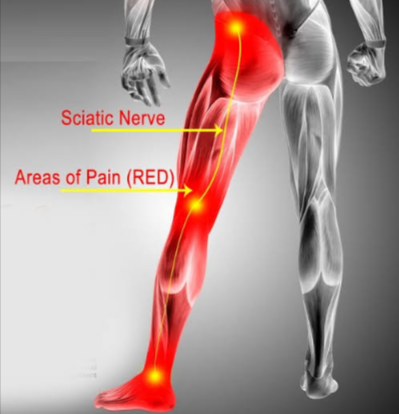
Sciatica affects a large share of adults at some point, and a meaningful subset experience pelvic floor involvement alongside it. Here is why the two connect: when the sciatic nerve is irritated, the body braces protectively, and the pelvic floor, which sits at the base of your core and works closely with muscles like the piriformis, is part of that bracing response. Once the pelvic floor tightens and stays tight, it can perpetuate the very symptoms you are trying to resolve. Breaking that cycle usually requires addressing the nerve and the pelvic floor together.
The Symptoms Cross Nerve, Pelvic, and Functional Categories

How do you know if your sciatica involves the pelvic floor? You may have pelvic involvement if classic sciatic symptoms appear alongside pelvic floor symptoms like pressure, pain with sitting, or changes in bladder or bowel function. The combination, not any single symptom, is the tell.
Nerve-related symptoms:
- Sharp, shooting, or burning pain from the low back through the buttock and down the leg
- Numbness or tingling in the leg, foot, or pelvic region
- Weakness in the affected leg
- Pain that worsens with coughing, sneezing, or sudden movement
Pelvic floor–related symptoms:
- Persistent tension, aching, or spasm in the pelvic floor
- Bladder changes such as urgency, frequency, or incomplete emptying
- Bowel changes such as constipation or straining
- Pain or discomfort with sitting, especially on hard surfaces
- A sense of pressure or heaviness in the pelvis
- Pain or discomfort with intimacy
Functional symptoms:
- Difficulty moving from sitting to standing
- Increased pain with walking, stairs, or forward bending
- Disrupted sleep and reduced tolerance for exercise or prolonged sitting
Symptom combinations vary widely from person to person, which is why an individualized assessment matters more than a checklist.
Several Causes Link the Sciatic Nerve to the Pelvic Floor
What causes sciatica with pelvic involvement? The condition usually stems from a mix of structural, lifestyle, and pelvic-specific factors that connect the sciatic nerve to the pelvic floor. Rarely is there a single cause; more often, several overlap.
Structural and mechanical causes include herniated or bulging lumbar discs compressing a nerve root, spinal stenosis narrowing the space around the nerve, and piriformis syndrome, where the piriformis muscle, which works intimately with the pelvic floor, irritates the sciatic nerve. Lifestyle and occupational factors such as prolonged sitting, poor ergonomics, and repetitive heavy lifting sustain pressure on the nerve while quietly tightening the pelvic floor. Pelvic-specific factors, pregnancy and childbirth, prior pelvic surgery or trauma, tailbone injury, or chronic pelvic tension can establish guarding patterns that interact with the nerve. Stress deserves its own mention, because it raises baseline muscle tension throughout the pelvic floor and can amplify nerve sensitivity.
Pelvic Floor Physical Therapy Treats Both Problems at Once
How does pelvic floor physical therapy help sciatica with pelvic involvement? Pelvic floor physical therapy treats the sciatic symptoms and the pelvic floor dysfunction together, which typically produces more complete and lasting relief than treating sciatica alone. Rather than chasing the leg pain in isolation, it targets the relationship between the nerve and the muscles that guard around it.
Treatment starts with a thorough evaluation of how your sciatic symptoms and pelvic floor function interact, movement patterns, posture, and the specific activities that flare you. From there, hands-on care does much of the work: gentle nerve mobilization to reduce sciatic sensitivity, myofascial release targeting the pelvic floor and surrounding muscles, and trigger-point work to release the tension that refers pain. Alongside the manual therapy, you learn nerve gliding to restore mobility, pelvic floor down-training to consciously release over-tight muscles (the opposite of endless Kegels), and strengthening of the core, hips, and pelvis for lasting stability. Education ties it together, ergonomics, flare management, and self-care between sessions so you leave with control over the condition, not just temporary relief. When appropriate and only with your consent, internal assessment can pinpoint pelvic floor involvement that external work alone might miss.
Why Contact Red Rock Physical Therapy

Sciatica that comes with pelvic pressure, sitting pain, or bladder and bowel changes is not “just sciatica,” and treating only the leg pain is why so many people get partial relief that never quite holds. Addressing the sciatic nerve and the pelvic floor together is what breaks the cycle. Red Rock Physical Therapy and Wellness is one of a select few clinics in McHenry County able to provide true pelvic floor therapy, and we combine it with hands-on myofascial release and nerve mobilization in private, one-on-one sessions. No referral is needed to begin in Illinois, and we will tell you honestly whether pelvic floor therapy is the right fit for what you are experiencing.
McHenry Physical Therapy Review
Red Rock Physical Therapy is a gem tucked away in McHenry. The staff is knowledgeable and friendly. They are willing to work with your schedule to get you in to receive care. They are concerned with your well being and safety. I recommend them to anyone needing physical therapy.
Shawn Smosna
Rating: 5/5 ⭐⭐⭐⭐⭐
Shawn Smosna, April 4, 2020
Read more of our client reviews on our Google profile
Frequently Asked Questions
Can sciatica affect the pelvic floor?
Yes. Sciatic nerve irritation can trigger protective tension in the pelvic floor, and that tension can then perpetuate or worsen the original nerve symptoms, which is why the two are often treated together.
Can a tight pelvic floor cause sciatica-like pain?
It can contribute. Muscles like the piriformis work closely with the pelvic floor, and tension in this region can irritate the sciatic nerve or refer pain along a similar path, so a pelvic floor assessment is worthwhile when sciatica does not fully resolve.
Do I need internal pelvic floor work to get better?
Not always. Many people improve significantly with external manual therapy, nerve mobilization, and exercise. Internal work is used only when it is clearly indicated and always with your full consent and comfort.
How long does treatment take?
It varies by severity and duration, but many people notice initial improvement within the first several sessions, with more complete resolution typically taking a couple of months of consistent care.
How is this different from regular sciatica treatment?
Standard sciatica care often focuses only on the spine or nerve. When the pelvic floor is involved, addressing both the nerve and the pelvic floor together tends to resolve symptoms that spine-only treatment leaves behind.
Can stress make it worse?
Yes. Stress increases overall muscle tension, including in the pelvic floor, and can heighten nerve sensitivity, so nervous-system down-regulation is often part of care.
Contact Us
Red Rock Physical Therapy & Wellness
5435 Bull Valley Rd, Suite 110
McHenry, IL 60050
Phone: 815-451-4502
Hours: Mon–Thurs 8am–7pm · Fri 8am–3pm · Sat–Sun Closed
Proudly serving McHenry, Crystal Lake, Woodstock, Lakewood, Lake in the Hills, Wonder Lake, Johnsburg, Ringwood, Algonquin, Huntley, and surrounding McHenry County and Southern Wisconsin communities.

Written & Reviewed By
Dr. Deborah A. Mitchell, PT, DPT, MPT
Doctor of Physical Therapy
Red Rock Physical Therapy & Wellness · McHenry, IL
APTA Private Practice Member · NPI 1417975566
Dr. Deborah “Debbie” Mitchell is a Doctor of Physical Therapy at Red Rock Physical Therapy & Wellness in McHenry, Illinois, with more than 20 years of clinical experience treating orthopedic, neurologic, and sports-related conditions. She earned her Doctor of Physical Therapy from Temple University (2006), and holds a Master of Physical Therapy (2002) and a B.S. in Health Science from Bradley University. Her own recovery from a serious car accident at 18 shaped her whole-person, hands-on approach and led her to specialize in the John F. Barnes Myofascial Release Approach®. Her clinical focus includes manual therapy, dry needling, balance, back pain, and fibromyalgia, and she serves as a Certified APTA Clinical Instructor.
Practice
Therapy · Temple ’06
(2014 & 2015)